


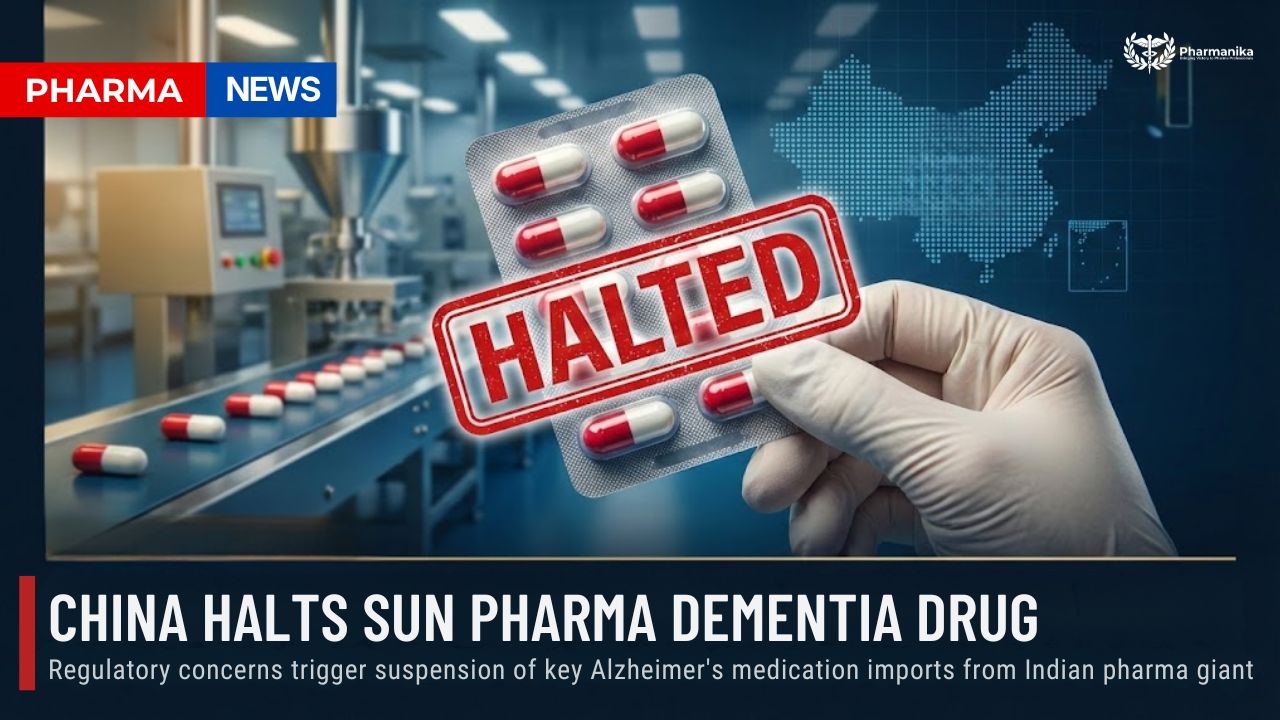
Breaking News: China Stops Sale and Use of Sun Pharma Dementia Drug
China’s top drug regulatory agency has now stopped the sale and use of dementia medicine made by the indian pharmaceutical company Sun Pharmaceutical Industries, which is raising concerns about drug quality and manufacturing standards. This incident has put a spotlight on Sun Pharma and its global operations.
What Happened?
China’s National Medical Products Administration (NMPA) announced that it has ordered a stop on the import, sale, and use of rivastigmine hydrogen tartrate capsules, a drug that is used to treat dementia, which is linked to Alzheimer’s Disease.
This decision is made after a remote inspection of Sun Pharma’s manufacturing facility in India. According to the regulator, inspectors found a serious fault in how the drug was produced.
What was the problem found?
The Chinese regulators found issues in keyareas, including;
- Weak contamination prevention measures
- Gaps in quality control systems
- Failure of the quality management department to fully perform its duties
Because of these concerns, the NMPA concluded that the medicine did not meet China’s required safety standards.
Sun Pharma’s Response
As of now, Sun Pharma has not issued any official response to the Chinese regulator’s decision. The company is India’s largest pharmaceutical manufacturer by revenue and supplies medicine to several global markets.
A pattern of regulatory scrutiny
This is not the first time Sun Pharma manufactures have faced regulatory action.
In 2024, the U.S Food and Drug Administration (FDA) issued a warning letter to the company for the same production site in India.
The FDA cited ”Significant Violation” of Current Good Manufacturing Practices (cGMP), which are the global standards used to make sure that the medicines are consistently produced and controlled.
What Happen’s Next?
Sun Pharma may need to:
- Address the issues pointed out by Chinese regulators
- Improve manufacturing and quality systems
- Undergo re-Inspection, so that the drug can be allowed-back into the Chinese market.
Until then, the ban on the drug remains in effect.
This incident highlights how regulatory oversight is becoming stricter worldwide, especially for medicines used to treat chronic conditions. For pharmaceutical companies, maintaining strong quality standards is not just a regulatory requirement; it is essential for patient trust and global credibility.