
Drug Companies Use AI to Speed Up Medicine Development and Save Millions
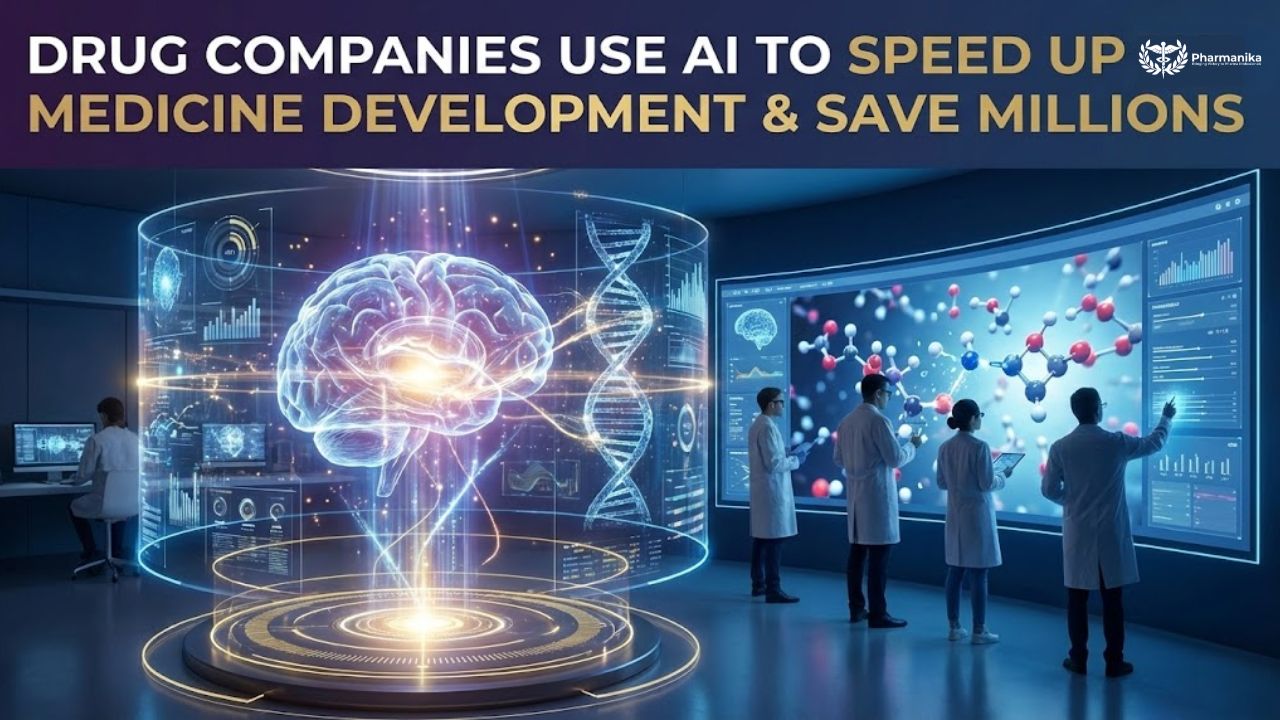
The pharma companies that are producing medicines are finding new ways to speed up the long process of drug-making. The companies are using AI and advanced technology to help with tasks that usually take weeks or even months ṭo complete.
To create a new medicine, it takes around 5 to 10 years and costs around 2 billion dollars. Each stage of the process takes a lot of time and effort. The drugs need to be tested on people with lots of reports to be submitted to the government bodies, and handle a huge amount of paperwork. But now the companies are using advanced technology to make the process much faster.
Recently, a lot of companies participated in the healthcare meeting at San Francisco. In the meeting, 13 drug companies shared how they are using these tools to speed up the process. There were 7 big companies and 6 small companies that talked about their progress.
A well-known Swiss company, Novartis, once wanted to test a medicine on 14,000 people back in 2023. Through the normal process, it would take 4-6 weeks to find the right hospitals and clinics for testing. But by using a new technology, they were able to finish the job in just a matter of 1-2 hours. The computer helped them find better testing locations, and they were able to enroll all the patients within the given time.
Teva Pharmaceutical is an Israel-based company that is using AI in so many ways to reach its goal of bringing successful drugs to the market more easily.
GSK, a well-known British company are using these tools to collect information about the patients and make the sign-up process faster. They are aiming to make their medicine testing process 15% faster. The company was able to save around 11 million dollars last year while they were testing their new asthma drug called Exdensur. The drug was approved last month by the regulators.
There was a German Company who figured out how to use AI and technology to change their long research reports into the format required by American drug regulators. This work usually takes a lot of time and requires a lot of staff. But the technology will help them to cut down on time and make it less labour-intensive. However, it is not being used yet.
A Danish Company is planning to use these tools to turn raw data into charts, tables, and regulatory reports. Once the tests are complete, this would be very useful to them.
An investment expert who participated in the meeting explained that signing up people for medicine tests is like a “leaky funnel” because participants often drop out along the way. With the help of this technology, it will be easy to reach out to patients, educate them about the study, check if they qualify, and schedule their appointments.
Brendan is an analyst who mentioned that it has become common to use these tools in pharma companies. But it will take another 2 to 3 years before we understand and measure how this has made drug development faster.
It is difficult to find out how much money is being saved because it depends on how and where companies use these tools. There was a prediction that if fully automated systems are used, it would make the process 35% to 45% more productive over the next five years.
There is one thing that the technology has not made ye which is making the medicines and discovering new types of drugs. But one research chief said he believes medicines discovered with help from these tools are already in development pipelines.
The technology is making the boring paperwork and the medicine development much faster. This is happening slowly and has not completely revolutionized the science of discovering new treatments.