
FDA Approval for AI Tool to Accelerate the Development of Drugs for Fatty Liver
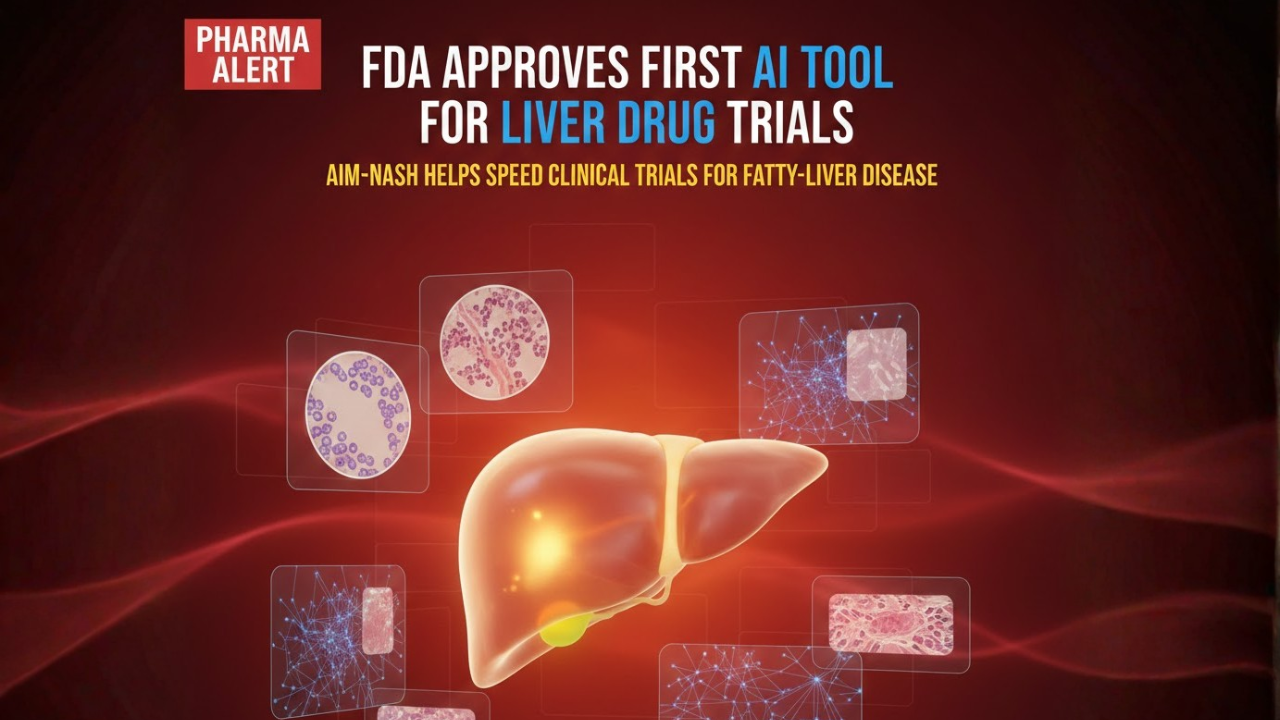
If you follow pharmaceuticals, biotech, or even artificial intelligence in healthcare, there is a significant step made by the US FDA recently. The organization has formally qualified the first FDA Approval for the AI tool for use in clinical studies aimed at MASH (formerly known as NASH), a devastating liver disease.
The program, known as AIM-NASH, is intended to examine digital pictures of liver biopsy slides with precision. By achieving FDA approval, the AI swiftly assesses the amount of fat, inflammation, and scarring in the liver tissue rather than relying solely on several human pathologists to examine each slide, which is laborious, subjective, and costly.
This is why it’s important:
One of the main obstacles in MASH medication clinical trials is biopsy reading. It still results in a great deal of variability and calls for several experts. While one expert may describe it as “moderate fibrosis,” another may describe it as “mild.” Drug trials are slowed down and more difficult to evaluate because of this discrepancy.
- The actual function of AIM-NASH is to scan digital biopsy images.
- It detects disease indicators such as fibrosis, inflammation, and fat accumulation.
- It uses existing pathology systems to assign standardized scores.
- After reviewing the AI’s findings, a human pathologist makes the ultimate decision.
Therefore, rather than taking the place of professionals, AI is improving the consistency and scalability of their work.
The Significance of the FDA approval
“Okay, cool, but why is this suddenly a big headline?” is presumably what’s on your mind.
This is the reason:
- Clinical trials could now go more quickly.
AI can quickly screen slides rather than waiting weeks for consensus biopsy readings. The heaviest lifting is mechanized, but humans still review things.
- It lessens human diversity
Slides are interpreted differently by different pathologists. AI helps standardize assessments, resulting in clearer, more trustworthy data from trials, which contributes to attaining FDA approval.
- It reduces trial expenses
One of the most costly aspects of MASH trials is biopsy reading. Significant cost reductions result from a reduction in manual labor.
- It might speed up the development of new medications for a large patient base.
Millions of people worldwide suffer from MASH, and there is still a great need for efficient therapies. Faster trials result in quicker FDA approval.
- It establishes a standard for regulations.
This is the first AI tool approved by the FDA for use in drug development assessments based on histology. We might see more AI tools in the future now that the door is open for further FDA approvals.
A Brief Overview of MASH and Why It Matters
Obesity, diabetes, and metabolic problems are connected with MASH (metabolic dysfunction-associated steatohepatitis), a severe and progressive liver disease. It results in scarring and inflammation of the liver, which may ultimately cause cirrhosis, liver failure, or cancer.
A biopsy, which is invasive and subjective, is typically needed to diagnose and track MASH. That’s precisely why AI and digital pathology are becoming so crucial in achieving FDA approval for faster diagnostic processes.
What Will be the Next Step
AIM-NASH can now be utilized in clinical trials conducted by several pharmaceutical companies without requiring separate approvals, thanks to FDA certification. Thus, anticipate seeing:
- More MASH medications are being tested.
- Quicker timelines for drug development
- Improved trial endpoints potentially leading to streamlined FDA approval processes
- More reliable proof for submissions to the FDA
And above all?
Patients may receive beneficial treatments sooner if they wait for them.