
The future of medical writing – Beyond Publication Writing
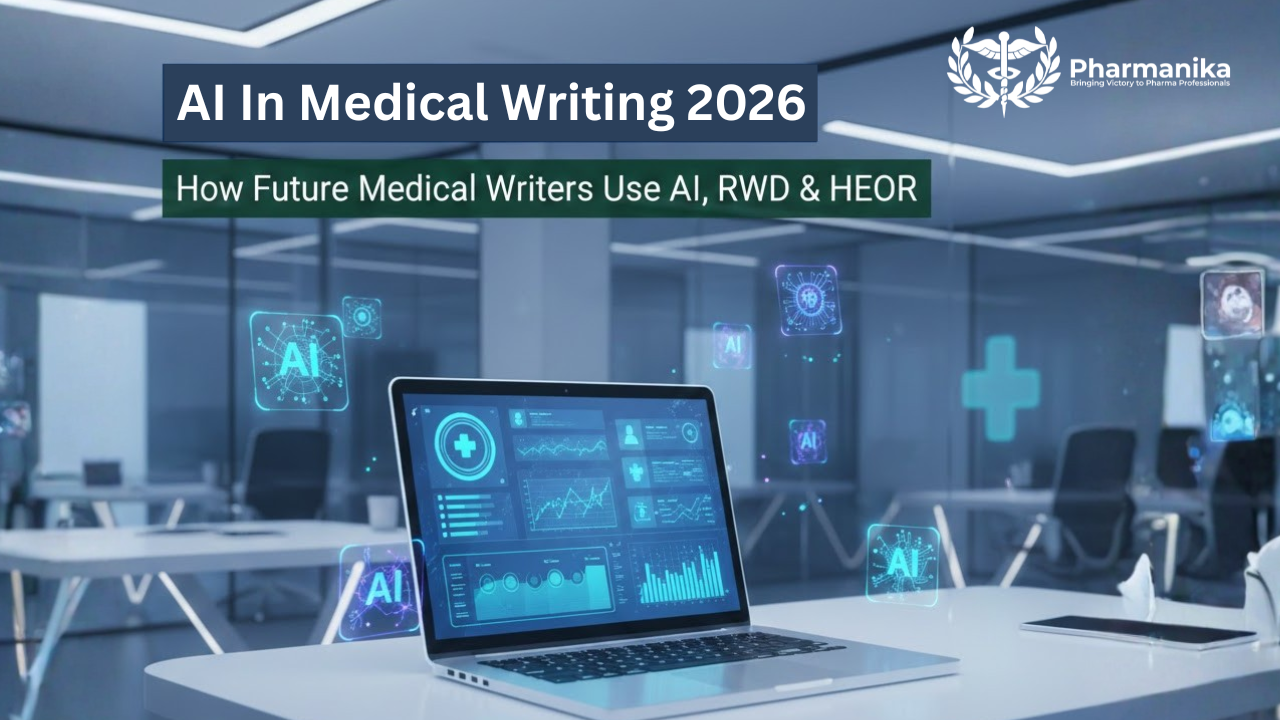
Imagine it’s your first day as a medical writer. Now you’re opening your laptop; you switch it on and and your screen shows you tools that make your work easier and also you got a AI assistant which makes your job easy, you have the assistance to check your grammar and also a tool that fixes your regulatory documents and also a dashboard that shows you real world patient data in a clear format so you don’t waste any time in searching for the missing commas or waste time formatting tables. Instead, now it’s time to think, analyze, and explain science to the audience. This is what modern medical writing tools accomplish, which combine writing, technology, and data. There are certification courses that will help you write better, which are BioTechNika’s courses.
1. What is Changing In Medical Writing?
Medical writing earlier focused mainly on:
- Publication writing
- Clinical study reports
- Literature reviews
Today, the role has become much bigger. New technologies and new expectations are changing the field. Medical writers now work with AI tools, regulatory automation systems, real-world data, and documents that help companies show the value of their medicines.
Students entering the field need to understand both science and technology.
2. Why Medical Writing is Evolving
As we all know, the healthcare world is changing day by day, where AI in healthcare is taking the place, so there are some reasons that result in the evolution, and here are some reasons.
- Clinical trials are running at a faster pace.
- Companies want to publish results sooner.
- Hospitals collect large amounts of health data.
- The Regulators expect well-organized documents.
- And also the Payers want proof that a drug will offer value.
- So now AI is a part of daily work across teams.
So, in this, we can understand that the job of a medical writer is no longer limited to just writing, but also includes organizing the information and understanding the data, and finally, our main focus is to use smart tools.
3. AI-Assisted Medical Writing
AI is not here to replace medical writers. It is here to help them work better and faster.
What AI Can Help With
- Cleaning grammar
- Making sentences clearer
- Checking plagiarism
- Summarizing long documents
- Creating outlines or drafts
- Helping with literature search
- Tracking references
As a writer, we know that all these take hours to complete our work, but now it can be done in minutes.
4. Beginner Tools Students Can Explore
So here are some of the tools that you can explore if you are a beginner
Grammarly– It is a tool used to fix the grammar of our work
Trinka AI – It is the tool that is used for academic English.
QuillBot – It is a free tool that is used for rewriting or also paraphrasing our sentences.
ChatGPT/Bing AI – So this tool is familiar to all of us, where we use it to get information, so this tool can be used for early ideas and for drafting purposes.
SciSpace – This is a common tool that is used for reading research papers easily.
Zotero/Mendeley – This is the tool that is used for saving and citing all the references.
Paperpal – This tool is mainly used for journal styling polishing.
So now we know that these are the tools that help you with your speed and quality, but don’t become lazy because of this; still, you have to think, don’t completely rely on AI and tools.
5. What AI cannot replace
- The meaning of data cannot be understood by AI
- It can never interpret clinical results as humans interpret
- Do you think AI can ensure accuracy? No, it is not accurate, as we humans are
- Even they can make scientific decisions as humans do.
Using AI is not wrong, but using only AI is wrong because AI supports the writers, but it can never replace humans.
6. Regulatory Automation Tools
So, are you familiar with regulatory writing? Regulatory writing involves huge documents, which include :
- Protocols
- Investigator’s Brochure
- Clinical Study Reports(CSR)
- CTD (Common Technical Document ) modules
So when we write, we have a particular format to be followed, so these documents should follow the strict formats in our later days, as we know writers used to spend days fixing layout issues, and now, today, automation tools help us to reduce the workload.
Tools Students Should Know
- Veeva Vault RIM is the tool that is used for regulatory document management.
- Master Control is mainly used for the workflow and QC.
- Please review this is the tool that is used for team reviews
- Aris Global Life Sphere is the tool that helps with regulatory templates.
- MS Word macros are a basic tool that involves automation inside Word
So these are some of the tools that help us improve accuracy and also help to reduce our work manually, but keep something in mind, you’re a writer, you need strong scientific and writing skills.
7. The Rise Of RWE (Real World Evidence) Reports
When it comes to AI in healthcare, the real-world evidence is very important, so this comes from the hospital records, which are recorded, and also the registries, insurance data, patient apps, and wearable devices. So here, the regulators and companies are using RWE to understand how drugs work in real life and also outside clinical trials.
What RWE Medical Writers Do?
So here, the RWE Medical Writers’ main role is to :
- Write observational study reports
- Prepare study protocols
- Create RWE summaries for regulatory teams
- Explain health patterns, safety trends, and treatment gaps
- Build patient-friendly summaries from complex data
RWE and Data visualization tools
- Power BI / Google Data Studio is the tool used to understand simple dashboards
- R Studio / Python basics is a common tool that is used for learning how data is analyzed.
- Epi Info is an easy tool for public health studies,
- OHDSI Atlas is the tool that is used for exploring real-world datasets
So, don’t think you have to have a complete knowledge of all this, but yes, basic comfort with simple graphs and terminology is very useful.
8. Value Dossier Writing (HEOR and Market Access)
So this includes the writing of documents that show why a new drug should satisfy the people, because nowadays countries not only check safety and efficacy, but instead they also check for cost effectiveness and real-world benefits.
Why This Is Important
As we all know, AI in healthcare costs are rising day by day, but there are particular positions that have to be looked for, and the governments and the insurance companies must decide which drug is effective and offers real value. So here, the medical writers help us to create strong evidence that supports the decisions.
What is Inside a Value Dossier
- Disease burden
- Unmet medical needs
- Clinical data
- Real-world data
- Safety information
- Cost-effectiveness results
- Budget impact
- Key value messages for payers
Tools Used in HEOR/Value Dossier Work
- TreeAge Pro is the tool used for cost-effectiveness modelling
- Excel is the common tool we all know, which helps with budget impact models.
- Power BI/Tableau is the tool used for dashboards.
- DistillerSR is the tool that helps to support systematic reviews.
- GRADEpro is the tool for evidence grading.
As a medical writer, I do not need to build models, but instead, I have to understand what the results mean.
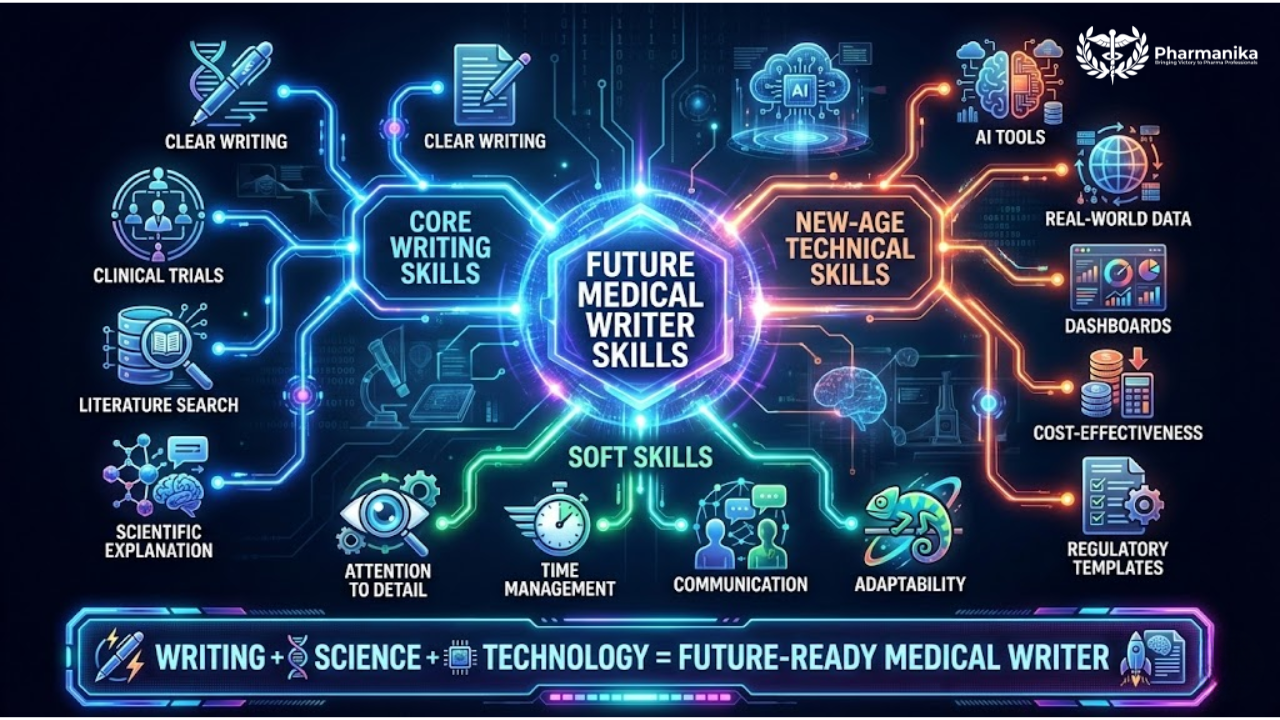
9. Skills Future Medical Writers Need
As we all know the skills play a significant role in modern medical writing, so students need both traditional skills and new era skills.
Core Writing Skills
- Clear and simple writing
- Understanding clinical trial basics
- Literature search and referencing
- Explaining scientific results
New-Age Technical Skills
- Knowing how to use AI tools
- Basic understanding of real-world data
- Familiarity with dashboards
- Understanding cost-effectiveness concepts
- Working with regulatory templates
- Attention to detail
- Time management
- Communication with cross-functional teams
- Ability to learn new tools
In the future, it will be a combination of Writing, Science, and Technology.
Conclusion
As we all know, medical writing is not only just writing, but it is also about writing with the addition of data and technology, so AI can never replace humans, especially in the medical writing era. But as medical writers, the students who learn to use the AI in a perfect way and also understand the data and results in a clear explanation of the data will grow faster. So here the future belongs to the writers who will think, organize, and communicate science in simple language while using the tools more smartly.