
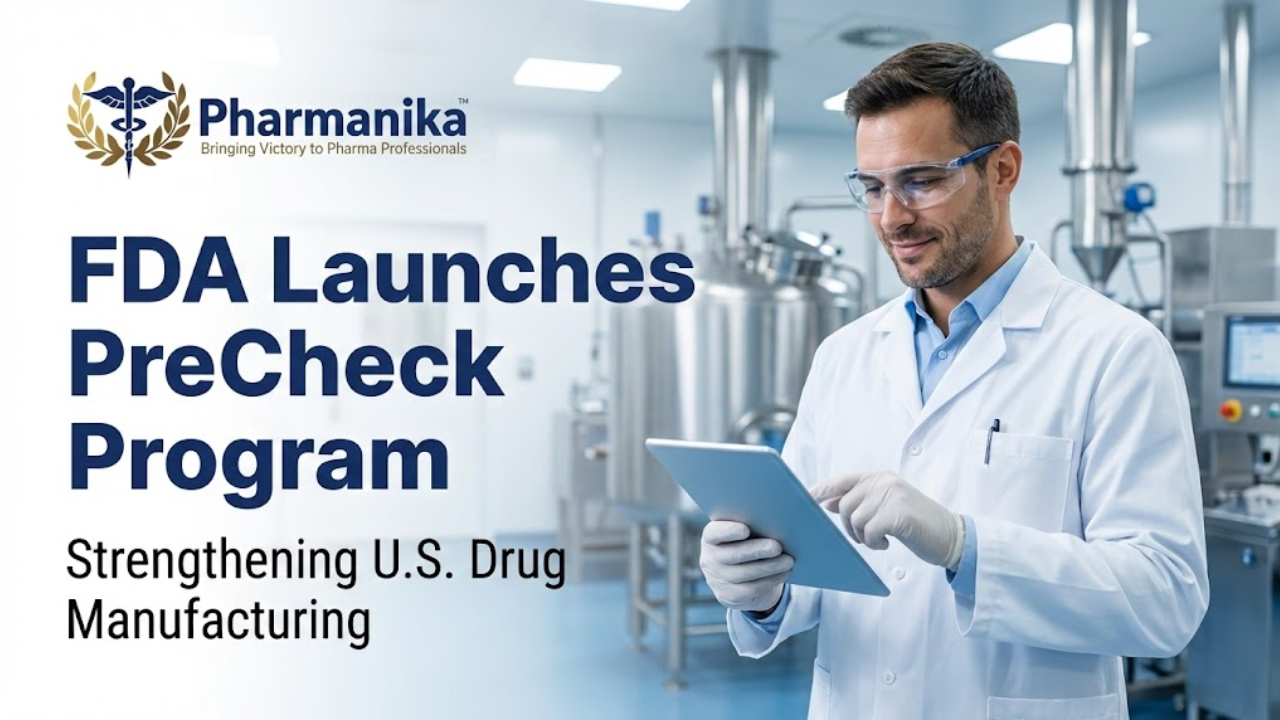
FDA Launches Precheck Program to Strengthen U.S. Drug Manufacturing
A new initiative has been launched by the U.S Food and Drug Administration (FDA), which is mainly launched to boost drug manufacturing, making it easier and faster to make the drug and to approve the production of the pharmaceutical in the United States. In other Pharma News, this program aims to reduce reliance on the foreign drug supply chains and ensure that there is reliable access to the critical medicines, and this PreCheck pilot program is a part of it.
Why This Matters?
Over the years, a large portion of the drugs that were used in the US has been manufactured overseas. And this includes all the active pharmaceutical ingredients and the finished medicines. The drug availability is affected due to the disruptions, which include pandemics, political tensions, or logistical bottlenecks. This happens when the production is concentrated in a few countries. Strengthening domestic manufacturing aims to make the U.S. drug supply more resilient and secure.
This is the growing concern over the supply chain vulnerabilities, which has led to government directives encouraging the FDA to streamline the regulations and also support the local drug production. The PreCheck Program is considered the direct push to the response.
What is the Precheck program?
The FDA’s precheck pilot program will help new pharmaceutical manufacturers to facilitate and navigate the regulatory processes more efficiently. There is no need to wait until a facility is fully built and is ready to produce the drugs; the companies can now engage directly with the FDA initially during the facility design, construction, and in the pre-production stages.
Before the obstacles this early engagement will allow potential regulatory concerns which can be identified and addressed. The program operates in two main phases.
- Facility Readiness Phase
The companies work with the FDA staff during the design and construction to make sure that the expectations and requirements are aligned properly.
2. Application Submission Phase
As the facility nears operational readiness, early meetings with the fda will help to refine the manufacturing and quality control plans, ensuring smoother reviews when the official drug applications are submitted.
The FDA aims to help the companies avoid costly delays and redesigns by moving the regulatory interactions earlier in the timeline.
Who can participate, and what gets priority
This Precheck pilot is now open to new manufacturing facilities in the us who are producing human drugs or biological products. This will include the facilities that have already started the construction and are about to start, or are in pre-operational development.
How the sites are chosen
When we pick which facilities to work with, we’re looking for a few specific things:
- Does it match what the country needs? We give a “thumbs up” to places making the specific drugs the U.S. needs most right now.
- Are they using the latest tech? If a factory uses modern, clever ways to build or make things, it’s going to be at the top of our list.
- How fast can they start? We’re looking for speed. The sooner they can get medicine onto store shelves and into hospitals, the better.
- Are they making the hard-to-find stuff? If a facility makes medicine that is currently in short supply or “at risk,” it gets moved to the front of the line.
Why talking early changes everything
The biggest change with PreCheck is that companies don’t have to wait until their factory is finished to start talking to the FDA.
By getting the conversation started early and often, they can:
- Fix problems before they get expensive. Instead of building something the wrong way and having to redo it, they can clear up any manufacturing issues while they’re still in the planning phase.
- Keep things moving. Constant check-ins cut out the waiting game, so drugs get to market much faster.
- Take the guesswork out of it. When the path is clear, it’s a lot less risky. This makes investors much more comfortable putting their money into U.S. drug making.
Basically, it’s about getting everyone on the same page from day one so there are no nasty surprises later on.
Other ways the FDA is helping
PreCheck is just one piece of the puzzle. The FDA is also trying other things to get more drugs made right here in the U.S.:
- Cutting down the wait time. For certain drugs that the country really needs, the FDA has created programs that review applications much faster.
- Fast answers for critical meds. In some cases, they’re promising to make a decision in just one or two months. Normally, this takes much longer, so it’s a huge time-saver for companies making essential medicines.
- Safety still comes first. Even though they’re moving faster, they aren’t cutting corners. Recent experience has shown that if there’s a safety concern, the FDA will still hit the brakes. Speed is great, but keeping patients safe is still the 1st priority.
The goal is to make it easier and faster to produce medicine in the U.S. without ever risking the quality of the drugs themselves.
Implications for Global Pharma
The U.S. move to strengthen domestic drug manufacturing could reshape global supply chains. Countries that have been major suppliers of generic medicines, such as India, may need to adapt by investing in local U.S. production or focusing on other international markets.
Despite these shifts, global collaboration will remain essential, as worldwide supply chains are interconnected, and domestic production alone cannot meet every healthcare need.
Conclusion
The FDA’s PreCheck pilot represents a significant change in how the U.S. approaches pharmaceutical manufacturing. By encouraging early engagement, prioritizing critical drugs, and streamlining reviews, the program seeks to bring more drug production on American soil. The impact on access to medicines and supply chain resilience will become clearer as more facilities participate and move through the process