


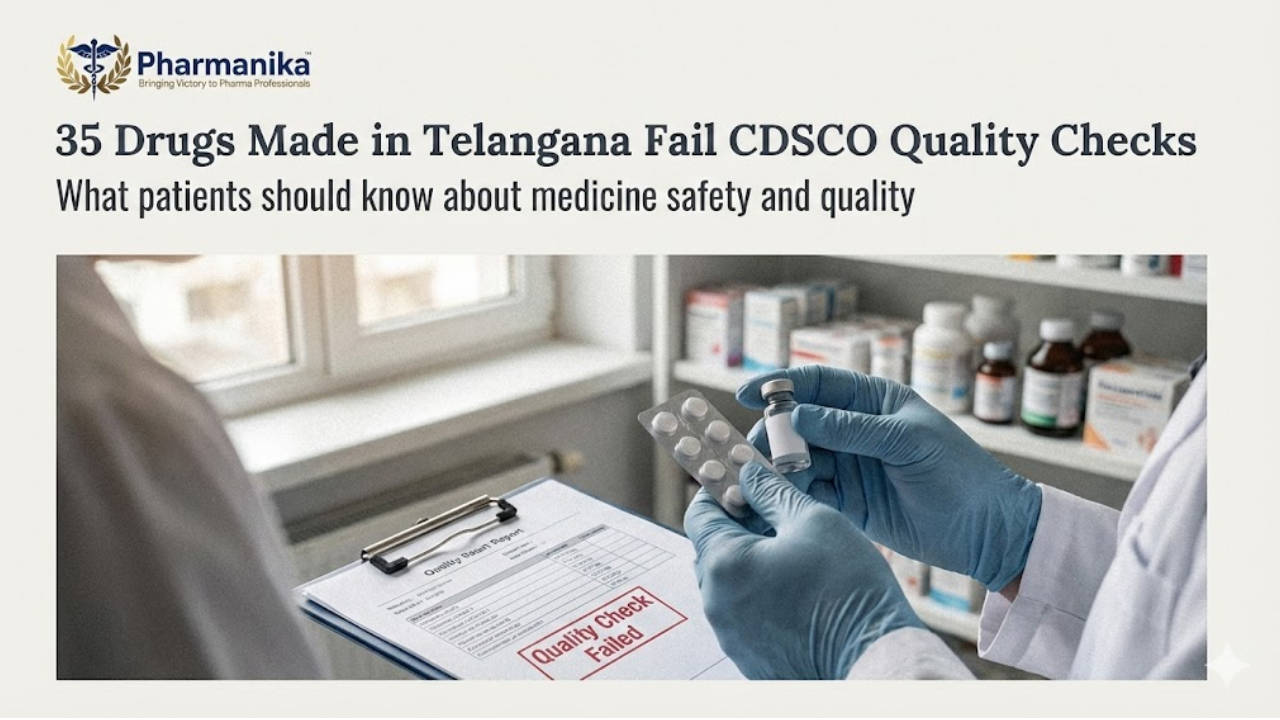
35 Drugs Made In Telangana Fail CDSCO Quality Checks
There was a recent alert from India’s top drug regulator, which raised a serious concern about the medicine and patient safety. This is a significant topic in the world of Pharma News. Over these past years, 35 drugs that were manufactured in Telangana have all failed the quality tests, which were conducted by the Central Drugs Standard Control Organization (CDSO).
And these medicines are the ones that are commonly used for pain, fever, infections, stomach problems, and parasitic diseases, which makes the issue relevant to almost every household.
What Exactly Happened?
On February 9, 2026, there was a report which was published that says that the CDSCO has flagged 35 drug samples that were manufactured in Telangana as Not Of Standard Quality (NSQ). These medicines were further supplied to states such as Himachal Pradesh and Uttarakhand and were found to either fail the quality parameters or be misbranded.
There was a concerning spike in August last year, where there was a record of the highest number of failed samples.
Which medicines were affected?
The NSQ list includes the medicines that doctors prescribe almost every day. And the most commonly used drugs, which are flagged includes the following:
- Paracetamol – Aceclofenac combinations (pain and fever)
- Pantoprazole and Rabeprazole (acid reflux and gastric issues)
- Amoxycillin + Potassium Clavulanate (antibiotics)
- Albendazole (anti-parasitic medicine)
Do you know why these drugs? The reason is that these are the drugs that are commonly used to treat routine health problems, and any compromise in the quality will directly affect the treatment outcomes and patient safety.
Why Drug Quality Matters The Most?
When a medicine is marked NSQ, it may:
- Contain incorrect amounts of active ingredients.
- Fails to dissolve or act properly in the body
- Be improperly labelled or stored.
This can lead to ineffective treatment, delayed recovery, or even to harmful side effects, especially in children, elderly patients, and people with chronic illnesses.
What Do The Health Experts Say?
The medical experts have pointed out that this issue reflects the gaps in regulatory oversight and post-market surveillance.
Dr. G Srinivas, he is working as a assistant professor in clinical pharmacology at Nizam’s Institute of medical sciences (NIMS), he has stressed on the major issue where these are the routine medicines which are commonly used for pain, fever, and gastric problems and he warns that any single drop in the quality of the drug will have a serious impact that will harm the patients and also he said that the state authorities must actively monitor the drug quality instead of just depending only on the central alerts.
Industry Viewpoint
Shivshankar Gupta from the Telangana Chemists and Druggists Association (TSCDA) has explained that most of the quality failures mainly occur due to partial or poor compliance with CDSCO manufacturing norms.
He added that while NSQ alerts are worrying, they also show that surveillance systems are working. Detection does not always mean widespread damage, but it clearly highlights the need for better manufacturing practices, stricter audits, and technical guidance, especially for small and mid-sized manufacturers.
What Action Was Taken?
Drug Control Administration (DCA) officials confirmed that:
- All affected batches were immediately recalled.
- Field inspections were conducted at pharmacies and health centres.
- Show-cause notices were issued to the concerned manufacturers
These steps were taken to ensure that unsafe medicines were removed from circulation as quickly as possible.
What Should Patients Do?
If you are a patient, there’s no need to panic – but awareness is important:
- Buy medicines only from licensed pharmacies.
- Avoid self-medication and follow prescriptions carefully.
- Report any unusual side effects or lack of effectiveness to your doctor
The Bigger Picture
This incident serves as a reminder that drug quality is a shared responsibility between regulators, manufacturers, pharmacists, and healthcare professionals. Stronger inspections, regular batch testing, and strict enforcement of standards are essential to maintain trust in India’s healthcare system.
Ensuring the quality is not just about regulations, it’s about protecting lives.