

Kolkata’s New Drug Safety QR Code Creates Buzz, But Reality Tells A Different Story
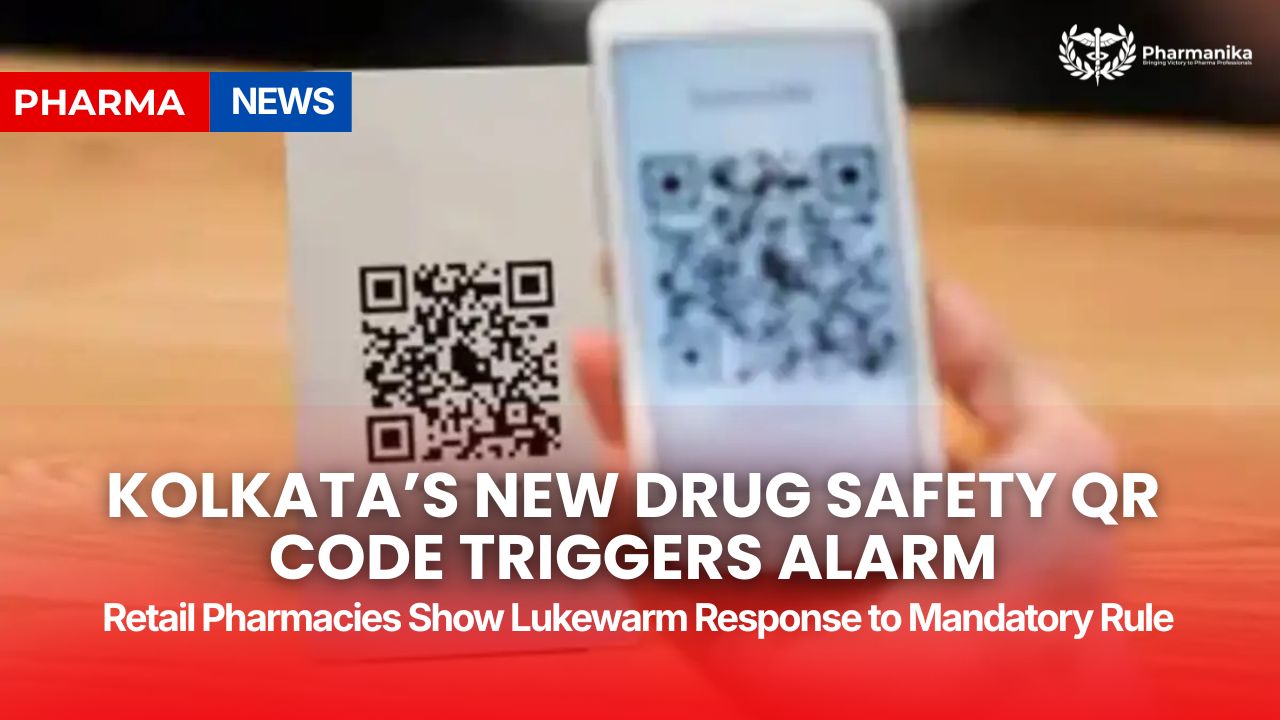
Kolkata, India: To make medicine safety more transparent, the Drug Controller of India (DCGI) has taken a new step in ADR Reporting. The DCGI has introduced a special QR code and toll-free number for all the pharmacies across West Bengal and made it mandatory for all retail pharmacies to display it. The main idea behind this is to let patients and professionals easily report any Adverse Drug Reactions (ADR).
But the problem arose when most of the retailers hadn’t shown much interest in this matter. The statewide retail bodies like Bengal Chemists and Druggists Association (BCDA) said that the response across the state pharmacies has been “Lukewarm.” So the DCGI is now launching a fresh awareness campaign, which aims to ensure every shop, including small towns and rural areas to display the code and educates the customers about the QR and what it means.
Why QR Code Rule Matters For ADR REPORTING?
What’s an ADR? When a medicine is taken at a normal dose, and that leads to harmful or unexpected side effects, from mild rashes to serious health complications, these reactions often depend on the Person’s Body, genetics, or other medications they might take.
The QR Code/Toll-free system will help anyone, including patients or doctors, to report these reactions quickly, which will help regulators to act faster if a drug has higher risks. This might also lead to discouraging the sale of sub-standard or unsafe medicines.
The problem is that outside the big cities and educated neighborhoods, most of the consumers have no idea about the ADR’s meaning. Most of them ignore mild reactions like itching or stomach pain; otherwise, they don’t connect these symptoms to medicines. Retailers say that many customers don’t bother about these mild symptoms.
The Retailers Challenge and BCDS Plans
According to Pharmacy-owners and Retailers:
- Awareness among consumers is very low, especially in rural and suburban areas, and so far, most of the ADR reports are from healthcare professionals like doctors and hospitals, but not from everyday buyers.
- Most of the public don’t realise that reporting is important, even when they scan the QR, some of them just take a photo and forget about it.
In response to this, BCDA said that it will start an awareness campaign across the state, reaching out to the chemists, shop-owners, and customers to highlight why ADR reporting is important and how it will improve the safety in Bengal.
What this ADR Reporting means for Everyday People
- If you or someone you know ever reacts to a medicine, like rashes, breathing problems, or any unusual symptoms, you now have a simple way to report it.
- This initiative can make medicine distribution safer and for regulators to act faster so that the harmful drug can be flagged promptly.
- Even if you live outside of Kolkata, spreading awareness among friends and family might help. So that, medicine misuse and a lack of side effect awareness will be reduced.
The QR Code rule is a simple but effective way towards safe medicine use across West Bengal. But this rule alone can’t fix things; therefore, awareness needs to spread. If chemists, customers, and professionals all take part in this, then it could probably become a model for safer drug distribution across India.