


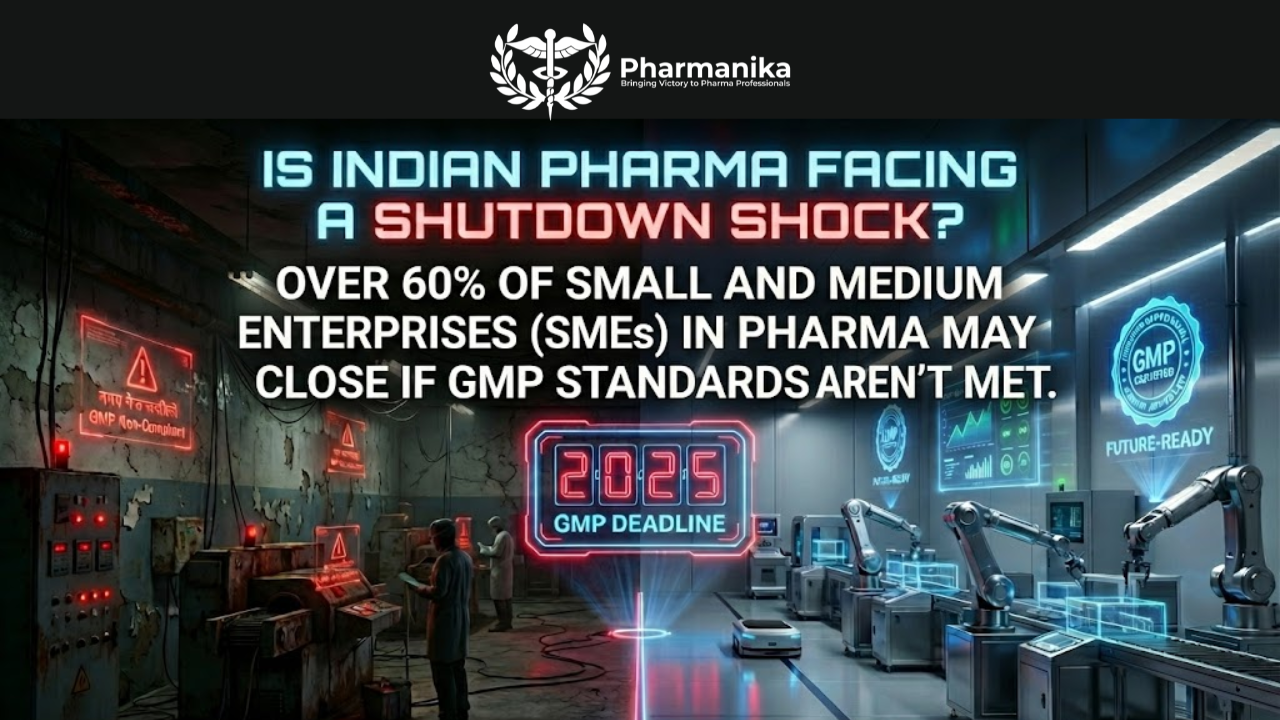
GMP Non-compliance Threatens To Shut Down More Than 60% Of India’s Pharmaceutical SMEs.
Many refer to India’s pharmaceutical sector as the “pharmacy of the world.” However, a significant problem with GMP compliance in India is subtly developing beneath this international reputation. Due to their failure to adhere to Good Manufacturing Practices (GMP) regulations, over 60% of the nation’s small and medium-sized pharmaceutical manufacturing facilities are in danger of closing. This is more than just a headline about regulations. The supply of medications, employment opportunities, and the viability of thousands of small pharmaceutical companies could all be impacted by this circumstance.
GMP: What Is It and Why Is It Important?
The fundamental quality standards known as Good Manufacturing Practices, or GMP, guarantee that pharmaceuticals are produced consistently, safely, and effectively. These regulations address everything from well-maintained facilities and skilled personnel to appropriate documentation and regulated production procedures. To put it simply, GMP is there to ensure that a tablet or syrup accomplishes exactly what it is intended to do, that is, without harming a patient. Regulators are no longer prepared to make concessions regarding compliance because of this urgency around GMP compliance in India.
The Deadline That Made All the Difference
Pharmaceutical companies were previously given more time by the government to modernize their facilities and comply with updated GMP regulations. December 31, 2025, is now the deadline. Many small and medium-sized manufacturers are still unprepared despite this extension. Because many of these businesses have narrow profit margins and rely mostly on outdated infrastructure, renovations are costly and time-consuming. Because of this, thousands of units now face the possibility of having to close if they don’t pass inspections related to GMP compliance in India.
The Reasons Behind the Struggles of Small Pharma Companies
Upgrading facilities is challenging but manageable for large pharmaceutical corporations. It is a whole different picture for SMEs.
- Numerous tiny units
- Use a small amount of capital
- Possess outdated industrial facilities
- Deal with growing utility and raw material costs
- Lack of access to reasonably priced finance
They frequently have to make significant investments in infrastructure, automation, documentation systems, and specialized labor in order to comply with new GMP standards in India, which not everyone can afford.
Potential Effect on the Supply of Medicines
The effects will be felt outside the plant gates if many pharmaceutical SMEs close. India is mostly dependent on these small producers for:
- Typical antibiotics
- Fever medications and analgesics
- Drugs for chronic illnesses
- Reasonably priced generic medications
Essential medication shortages could result in a widespread shutdown, particularly in rural and semi-urban areas. Additionally, it might increase reliance on fewer major manufacturers, which could have an impact on availability and prices, emphasizing the need for GMP compliance in India.
Jobs and Livelihoods at Stake
SMEs in the pharmaceutical industry are significant employers. Thousands of individuals rely on these facilities for their livelihood, from packagers and logistics teams to manufacturing workers and quality experts. Job losses could be substantial if closures occur on a wide scale, especially in pharmaceutical clusters where small businesses predominate and GMP compliance in India is a challenge.
Less Flexibility and Stronger Enforcement
Enforcement will be rigorous, according to regulatory officials. There are currently routine inspections in place, and noncompliant units may have their licenses suspended or revoked. Enhancing drug quality and rebuilding confidence in Indian pharmaceuticals, particularly in international markets, are the main priorities. Smaller players are finding the changeover time difficult, despite the necessity of this goal for ensuring GMP compliance in India’s pharmaceutical sector.
A Pivotal Moment in Indian Pharma
The pharmaceutical sector in India may undergo a structural transformation at this time. Businesses that make quality and compliance investments may become more robust and competitive. Sadly, others might not make it through the change. The current problem is striking a balance between industry sustainability, public health, and quality control without impeding access to reasonably priced medications, as GMP compliance India efforts are intensified.
Conclusion
Rules and timelines are only one aspect of the quest for GMP compliance. It concerns the future of Indian pharmaceuticals, including how they are produced, their level of safety, and who gets to continue in the industry. The upcoming months will be crucial for pharmaceutical SMEs. Adaptation is no longer a choice. It’s a survival issue, especially with the focus on GMP compliance across India.