


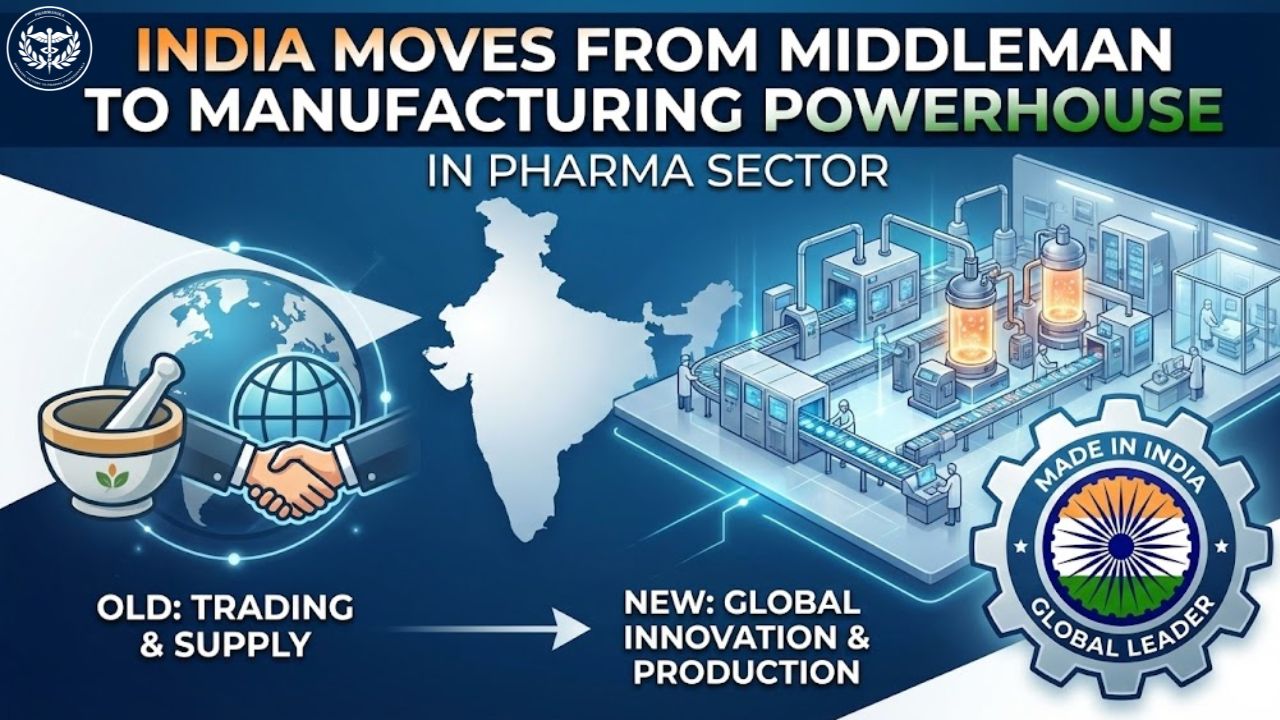
India Moves From Middleman to Manufacturing Powerhouse in Pharma Sector
India has earned its reputation as the “pharmacy of the world” over the past several years, and all thanks to its strength in generic medicines. The country is now going through a big shift focused on cutting down foreign dependency and positioning itself strong in the global pharmaceutical manufacturing hub. Indian pharma companies have spent almost ten years producing huge quantities of high-quality generic drugs for international markets. But even after that, they’ve had to import most of their active pharmaceutical ingredients and key starting materials, particularly from China. Because of the policy support that is now changing. There are a few major investments and determined efforts by the industry to develop capabilities at home.
Close to 70% of the APIs and intermediates used in Indian drug manufacturing came from overseas, which left the country exposed to problems in external supply chains, particularly in the pharma sector. This became evident during the COVID-19 pandemic when China went into lockdown, and there were a lot of shortages of crucial raw materials. That disruption served as an alarm/warning after which India pushed itself to work harder towards being self-reliant in the pharma industry.
There was a production-linked incentive scheme for bulk drugs that was introduced by the government, which played a major role in the transformation. It was able to get a good amount of investments quickly. There were investments of around Rs 4,763 crore within 3 years of the scheme being launched, and it also surpassed the original target of Rs 4,329 crore. India started producing 26 important starting materials within the country through this scheme. This cut the need for foreign imports. The broader PLI programme for pharmaceuticals has brought in more than Rs 40,000 crore in total investments, crossing what was initially anticipated in the pharma sector.
There are 726 APIs and intermediates produced in India, of which 191 are being produced for the first time. The financial impact is also good, and there is an estimation that by avoiding imports through the scheme, the country has saved around Rs 1,807 crore as of September 2025. Innovations in the pharma sector contribute significantly to this achievement.
Building the Infrastructure has also played a major role in the advancement. There are three bulk-drug parks that are being specifically set up in Himachal Pradesh, Gujarat, and Andhra Pradesh. The central government has provided a fund of Rs 1000 crore for each park separately. These parks will have shared facilities like effluent treatment plants, solvent recovery systems, and logistics support. This will eventually lower the production cost and improve competitiveness in the pharma sector. The state governments have also joined by offering subsidies for the capital, advantages in taxes, and reduced land rates.
There are a few more struggles to deal with. There are a few products based on fermentation that are under the control of Chinese manufacturers. There are also various projects that have been slowed down by delays in land approvals, environmental clearances, and payments of the subsidies. Experts mention that we should continue to invest in manufacturing technology, train more workers, and maintain the quality standards to completely take over the manufacturing opportunity within the pharma sector.
Even though the growth is steady and firm, the pharma companies are looking to reduce their dependency on China for supply chains. India has positioned itself well not only in generics but also in biosimilars, complex formulations, and important APIs. If we put in the same efforts, then the pharma industry will move into a fully integrated manufacturing powerhouse that is resilient and competitive across the global markets.
There is a huge transformation that is going on in the pharma industry, and it is building everything from the ground up with a focus on evolving the pharma sector.