

IIT Madras, Australian Universities Develop Nanotech Drug Delivery for Breast Cancer
There is a new innovation by the Scientists from IIT Madras and two Australian universities. They have created a new method to deliver cancer drugs directly into breast cancer cells. This amazing finding could make the treatment safer and more affordable for the patients.
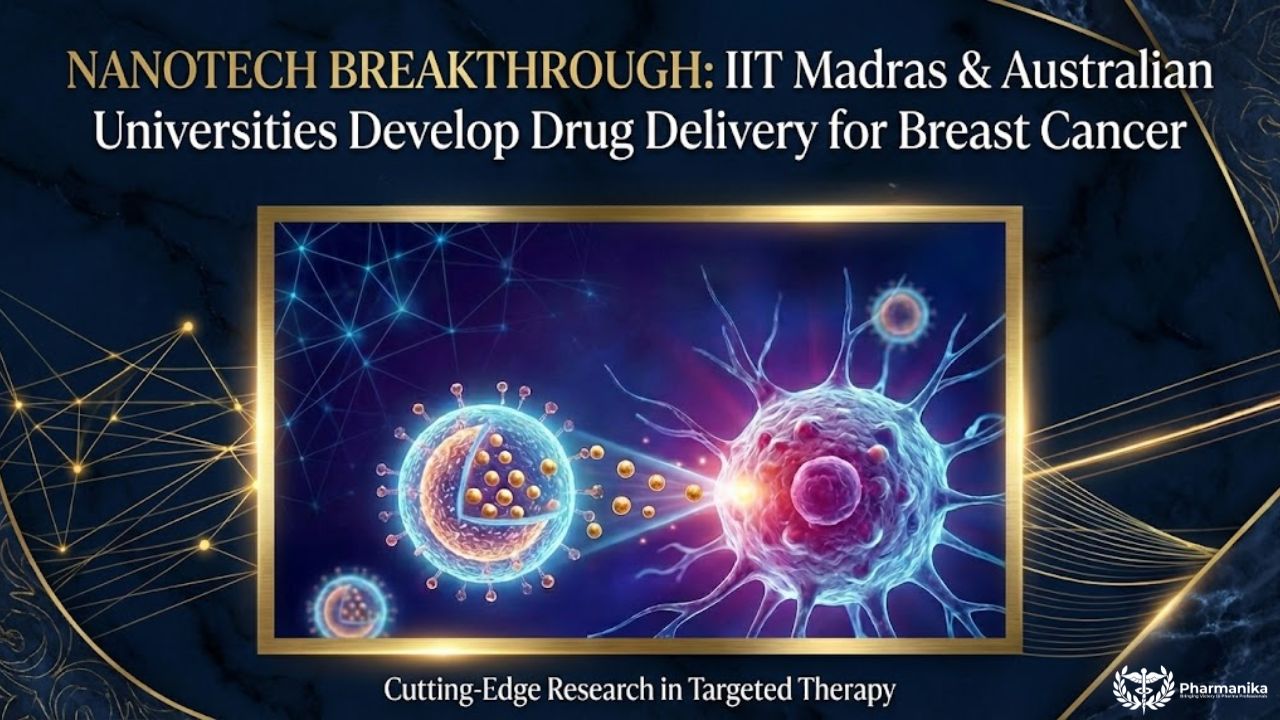
The research teams have experts from IIT Madras, Monash University, and Deakin University in Australia. They have achieved it by developing a special platform that uses tiny silicon tubes combined with microscopic drug carriers called nanoarchaeosomes. This system sends the chemotherapy medicine directly into the cancer cells without harming any healthy tissue around them.
Every year, there are so many women who are being killed by breast cancer. Regular treatments like chemotherapy and radiation work, but they spread throughout the body and also damage the healthy cells along with the cancer cells.
The platform works by loading the cancer drug doxorubicin into heat-resistant nanoarchaeosomes. There is a silicon wafer, and these silicon nanotubes are arranged on it. This, in simple terms, is delivering medicines directly into the cancer cells through tiny needles.
This system showed promising results in the laboratory tests. It killed the breast cancer cells effectively without damaging the healthy cells. It stopped the cancer from growing and spreading further and also prevented it from forming new blood vessels. For conducting the tests, commonly used cells, the MCF-7 breast cancer cells, were used.
There is a major advantage in the system is that it needs 23 times less medicine compared to the regular doxorubicin treatment. This comes to the conclusion that the patients might need only a lesser dose, which reduces the side effects and lowers the treatment costs. The system also provides long-lasting treatment by releasing the drug slowly for over 700 hours.
There are so many people who can’t afford expensive cancer treatments, and Dr Swathi Sudhakar from IIT Madras said that this technology could change healthcare so that everyone can afford it.
Since the system is made of a silicon nanotube, it has another benefit of safety. Unlike carbon or titanium, this is safe for the body and does not cause toxic reactions. This makes the development easy and can be used across the world. The research findings were published in the journal Advanced Materials Interfaces.
This project was funded by IIT Madras with a joint initiative with the Deakin Joint Research Initiative, the Alexander von Humboldt Foundation, and the Australian Research Council.
This model has so far been tested in laboratory cell cultures and chick embryo models. It was confirmed by both tests that the system works effectively. The next step is testing in living animals, followed by studies on different types of cancer.
This work will create a strong foundation for a flexible drug delivery system that could work for many cancer types, said Dr. Roey Elnathan from Deakin University. Professor Nicolas Voelcker from Monash University expects the technology could be ready for real medical use within five years.
This development has taken precision medicine to the next level, where treatments target diseases more accurately. If this drug gets through clinical trials successfully, then this platform will transform how chemotherapy is delivered and will make the cancer treatment smarter, safer, and accessible to more people.