


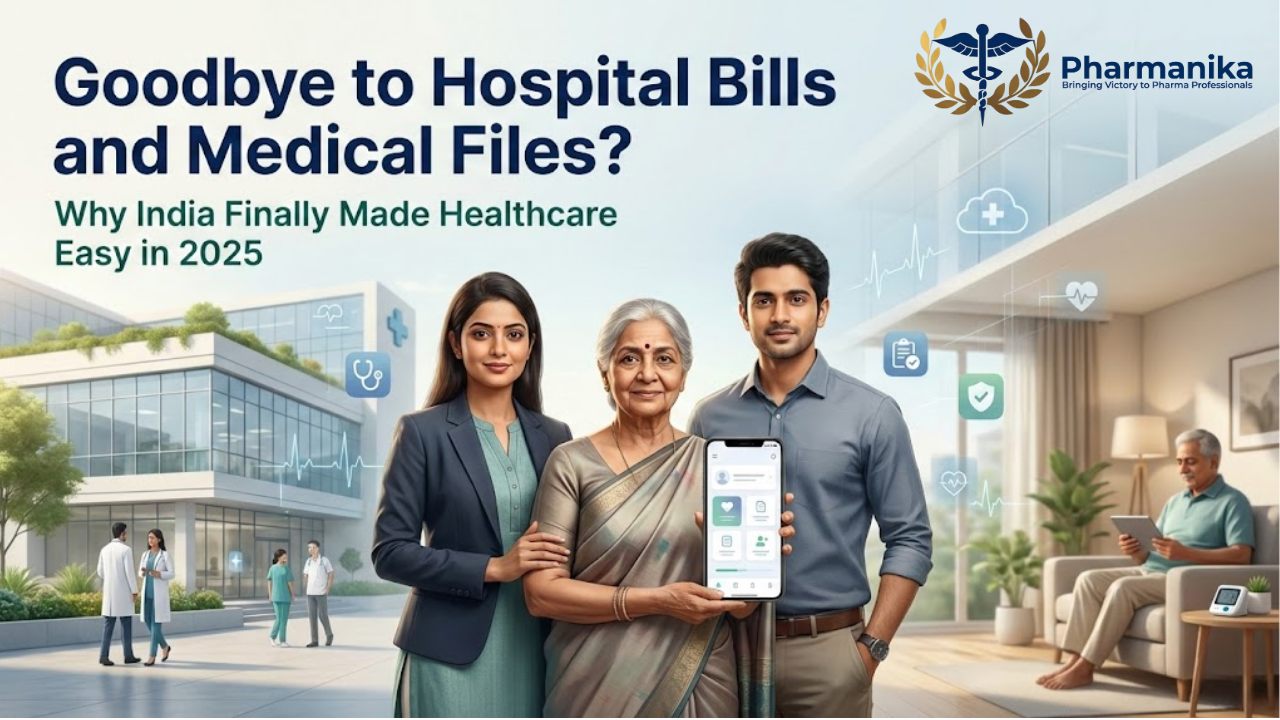
Goodbye to hospital bills and medical files? Why India Finally Made Healthcare Easy in 2025
India’s healthcare system underwent a significant transformation in 2025 without much fanfare. The entire system began to revolve around us, ordinary people, and our everyday lives rather than merely constructing more hospitals or concentrating primarily on emergency rooms. Instead of requiring us to schedule our entire lives around a clinic visit, healthcare. Began to fit into our routines thanks to digital records and more affordable medications. This is a comprehensive analysis of the major developments in 2025.
Transitioning from “Hospital Trips” to “Daily Health”
For a very long time, “healthcare” in India meant going to the hospital only when anything really went wrong. However, that perspective began to shift significantly in 2025. The emphasis shifted to daily health maintenance, particularly for chronic conditions including diabetes, heart disease, obesity, and mental health.
The system began encouraging early detection and routine check-ins rather than waiting until symptoms became frightening. This one adjustment is significant because it helps everyone live a much better life free from constant anxiety and keeps people out of hospital beds.
At Last, Digital Health Records Started to Help
Although we have been aware of digital records for some time, it wasn’t until 2025 that they truly proved useful to the general public. These days, it’s more than just a fancy concept—it works.
Now, you can essentially:
- Store all of your medical records on your phone in one secure location.
- Without having to carry those bulky plastic files, you may quickly share your reports with a new physician.
- Don’t waste money on repeating the same blood test because you misplaced a piece of paper.
- Observe how your healthcare changes over the course of several months or years.
The finest aspect? Your own data is under your control. It has greatly increased the connectivity of everything.
The heavy lifting is being done by health apps.
Apps for healthcare have matured. They are no longer limited to scheduling appointments with doctors. These applications began to assist with “everyday” tasks in 2025, such as automatically monitoring your test reports and blood work.
- I’m sending you reminders to make sure you always take your medication.
- Keeping an eye on your health patterns to detect any deviations.
- Allowing you to video-call a physician for prompt guidance without having to travel.
- Providing you with dietary and exercise recommendations based on what your body requires.
These tools helped people with long-term illnesses keep on track with their therapy and made life much less stressful.
Insurance for Maintaining Health
In India, healthcare insurance typically didn’t give a damn until you were hospitalized. That outdated way of thinking began to change around 2025.
Insurance firms began experimenting with novel approaches, such as:
- Giving you benefits or discounts for maintaining an active lifestyle is known as wellness rewards.
- Programs for prevention: Paying for routine examinations to avoid illness in the future.
- Syncing with your watch: Giving you better deals based on your fitness statistics.
- Outpatient coverage: Assisting with the cost of testing and medications, not just major surgery.
This is revolutionary because it genuinely motivates us to maintain our health rather than waiting for a catastrophe to occur to “claim” insurance.
Purchasing Modern Medicines Has Become Easier
Making cutting-edge medications accessible to all was another significant victory in healthcare in 2025. We witnessed the introduction of numerous novel therapies for conditions, including diabetes and obesity, to the Indian market.
These used to be far too costly for the typical individual. However, when demand increased, and we began producing more of them in India, these “new-age” therapies are now much more reasonably priced. This is significant for us since lifestyle diseases are a major issue in India, and the treatment is now available to everyone, not just the wealthy.
The primary objective now is prevention.
If there’s one major takeaway from healthcare in 2025, it’s that being ahead of the curve is ultimately what matters most. The system is now concentrated on the following, rather than merely responding when someone gets sick:
- Early warning indicators: identifying problems before they become painful.
- Frequent monitoring: Paying special attention to your vital signs.
- Risk prediction is the ability to forecast future events based on your current lifestyle.
Simple tools like tracking apps, home test kits, and smartwatches are assisting people in identifying changes before they become significant enough to necessitate hospitalization.
Why This Is Important to You and Me
- These are not only government rhetoric or “policy” adjustments. They alter your way of living. It implies that you can access your medical history on your screen in a matter of seconds.
- You learn about health problems early on, when they can be easily resolved.
- long-term Treatments won’t break the bank.
- You truly have a sense of mastery over your own body.
The Big Picture: India’s Future 2025 demonstrated that we are headed toward a time when individuals are assisted by technology and patients are not merely “cases” but rather active participants in the process. At last, we are taking care of our healthcare daily rather than only during emergencies.
Conclusion
In India, 2025 marked the beginning of a “patient-first” era rather than just another year. If we continue, everyone’s experience with healthcare will be completely different and far better.